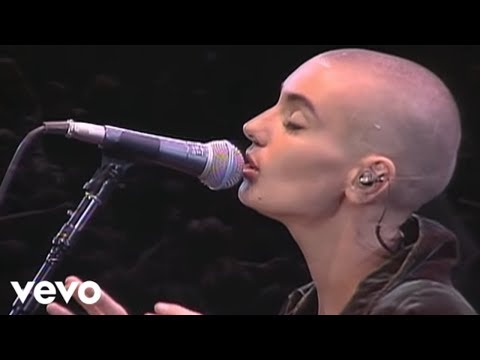
This is a story about Sinéad O’Connor’s “Nothing Compares 2 U.” Prince wrote it. She took it. It’s her song. But it cost her dearly.
Prince, as you are probably aware, wrote a shit ton of songs. And gave a shit ton away. And it transpires that some of those songs just sound better when sung by a woman. The Bangles doing “Manic Monday.” Chaka Khan doing “I Feel for You.” Sheila E. doing “The Glamorous Life.” You want the truth? Cyndi Lauper’s version of “When U Were Mine” is better than Prince’s version of “When You Were Mine.” That’s right. What are you gonna do about it? I’m not on Twitter (as far as you know, probably). You don’t know where to find me. It’s not that Cyndi Lauper changed the meaning of this song, it’s that Cyndi Lauper distilled the pure exquisite flamboyant misery of this song.https://www.youtube.com/embed/Q53oZpyxZ-8?rel=0&%3Bstart=140&start=140
But Sinéad O’Connor doing “Nothing Compares 2 U” on her second album, 1990’s I Do Not Want What I Haven’t Got—this is different. However cordial the initial business transaction here—the process by which Prince allowed her to record and release his song—forget all that. This is a hostile takeover. Sinéad embodies this song on a molecular level. She changes the fundamental meaning of this song. She owns this song. She steals this song. Just the audacity of that. The greatness and the fearlessness required of her to do that. Sinéad O’Connor saying, “I’m gonna steal a song from Prince” is like Nicolas Cage saying, “I’m gonna steal the Declaration of Independence.”
Who is this person? What does she want? What doesn’t she want? What do we want from her? In June 2021 Sinéad O’Connor published a memoir called Rememberings. It’s rough. She was born in Glenageary, Ireland, in 1966. The third of four children. Her parents split up when she was 9; she split time between her father, who was initially granted custody of the children, and her mother, who in Sinéad’s account was physically and mentally abusive. Sinéad mentions a few times that when she’d come home from school for the summer she’d pretend she’d lost her field hockey stick, because she didn’t want her mother to beat her with it. She says her mother would beat her with a carpet-sweeper pole instead and make Sinéad say “I am nothing” over and over. That’s it for details. Her mother died in a car accident when Sinéad was 18, shortly before she got her first record deal. I tell you that much only because this might somewhat explain both the fragility and the ferocity with which Sinéad O’Connor sings, and the hard-fought self-assurance she brings to every song she’s ever sung.
The pop-star-memoir arc, generally—the Rise and Fall narrative you know and love from any Oscar-nominated biopic or tawdry VH1 Behind the Music episode you’ve ever watched—at least there’s a rise, right? At least there’s a brief period when the pop’s star discovery, and breakthrough success, and apex fame and fortune are enjoyed by the pop star. Over-enjoyed, inevitably. But enjoyed. But Sinéad’s book is rough going in this respect as well. She writes that she was sitting on the toilet—she wants you to know that she can’t remember whose toilet—when she is informed that both “Nothing Compares 2 U” and I Do Not Want What I Haven’t Got have both hit no. 1 in America, on the singles and albums charts respectively. She writes, “Whoever it was who told me got cross with me because I didn’t take the news happily. Instead, I cried like a child at the gates of hell.”
Posted from:https://www.theringer.com/2021/6/2/22464082/sinead-oconnor-nothing-compares-2-u-prince