It begins with the violins — orderly and baroque. The choir rises. The audience rises. And before you know it, the concert hall, church, rec center or school auditorium fills with the triumphant sound of one of the most beloved musical works of the season: Handel’s “Hallelujah” chorus.
Over the next four minutes (and change) the choir will repeat the word hallelujah 48 times, but the audience and musicians never seem to tire of it. Credit Handel’s vibrant melody, but also the almost mystical power of that combination of vowels and consonants.
HalleLUjah!
HalleLUjah!
Hah-lay-ay-loo-YAH!
But what does hallelujah mean, exactly? And why does it continue to resonate with us, untranslated, thousands of years after it first appeared in the Hebrew bible?
And what is it about hallelujah that inspires composers and songwriters to deploy it so frequently and reverentially from Handel to Ray Charles to Leonard Cohen?
The Oxford English Dictionary defines hallelujah as “a song or shout of praise to God,” but biblical scholars will tell you it’s actually a smash-up of two Hebrew words: “hallel” meaning “to praise” and “jah” meaning Yahweh, or God.
But that’s just the official meaning. For Grant Gershon, director of the Los Angeles Master Chorale, hallelujah is a perfect word because it can take on different meanings.
“It’s this sound that is just so full of possibilities,” he said. “You can fill it with whatever you need to say or communicate.”
In Handel’s great chorus, the word is joyous, victorious, accompanied by trumpets and drums. In Sergei Rachmaninoff’s “All Night Vigil,” however, hallelujah reflects a more quiet devotion. Repeated over and over again, it serves almost as a mantra.
“I imagine an older Russian person in front of an icon, just murmuring to themselves, ‘Hallelujah, hallelujah, hallelujah,’ ” Gershon said.
As a side note, the Russians add an extra vowel sound to their hallelujah and drop the “H” so it is pronounced Ah-lay-lu-ee-yah. That opens up even more possibilities to the liquid, fluid approach to the word, Gershon said.
Hallelujah first appears in the Book of Psalms — a compendium of sacred poems in the Jewish Bible that dates to the 5th or 4th century BC. There it generally prefaces the beginning of a passage or shows up at its conclusion.
“Hallelujah functions as a summary,” said Chris Blumhofer, assistant professor of New Testament at Fuller Theological Seminary in Pasadena. “It’s meant to usher you into the experience of praising who God is and what God’s done.”
Sarah Bunin Benor, director of the Jewish Language Project and a professor at Hebrew Union College in Los Angeles, said hearing the word makes her think of the Hallel — a recitation of Psalms 113-118 chanted by observant Jews on holidays.
“We say it on Rosh Hodesh, the first day of the month celebration. It’spart of the Passover Seder,” she said. “It’s a very joyous prayer, very beautiful and very meaningful.”
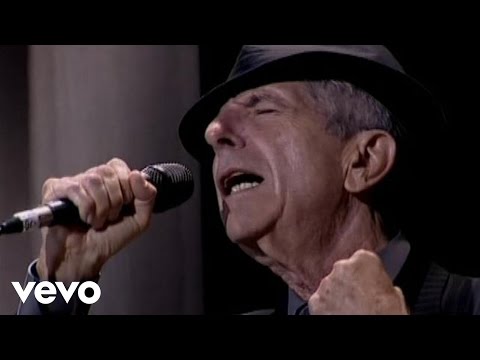
But by far the most popular and famous use of hallelujah in popular music is Leonard Cohen’s haunting and frequently covered “Hallelujah,” written in 1984.
The song does not rely on biblical quotations, but it does make use of biblical stories: It’s about David, who consorts with Bathsheba, and orchestrates her husband’s death so he can marry her. And it’s about Samson, who, instead of saving his people from a hostile army, runs off with Delilah, who cuts his hair, leaving him powerless.
But ultimately, the song is about all of us — our failings, our imperfections, and our desire to have a relationship with the unknowable divine, said Marcia Pally, author of “From This Broken Hill: God, Sex and Politics in the Work of Leonard Cohen.”
“He articulates in the song what we know about ourselves,” she said. “It’s about our relationship with the transcendent and with other people, how we breach those relationships, and sever them, and yet still we have to come back to hallelujah.”
Posted from: https://www.latimes.com/california/story/2021-12-20/hallelujah-the-remarkable-story-behind-this-joyful-word